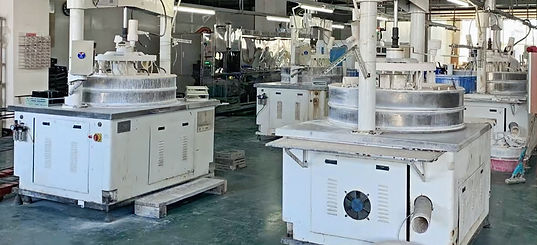
Edge Grinding & Polishing
Edge grinding and polishing is a critical glass finishing process that enhances safety, durability, and visual clarity by removing sharp edges, chips, and surface imperfections. Using diamond grinding wheels and precision polishing equipment, we achieve smooth, uniform edge profiles such as flat, beveled, 2.5D, and 3D finishes. This process not only prevents edge cracking and handling injuries but also improves the overall mechanical strength and optical appearanceof glass panels used in displays, electronics, architecture, and industrial applications. Our high-precision edge finishing ensures tight tolerances and flawless results—essential for both functionality and aesthetics in custom glass products.


Glass Edge Grinding & Polishing: Key Considerations
Importance of Edge Chamfering
Edge chamfering (or beveling) is essential for improving safety, durability, and aesthetic quality in glass panels:
-
Safety: Sharp 90-degree glass edges can cause injury; chamfering eliminates this risk.
-
Damage Prevention: Chamfered edges reduce chipping and improve edge strength.
-
Visual Appeal: Creates a refined, professional look in high-end applications.
Common Edge Grinding Defects to Watch For
Maintaining glass quality requires inspection of edge surfaces for defects such as:
-
Chipping – Small breakages along the edge
-
Bright Edges – Over-polished, glossy segments
-
Scratches – Linear marks from grinding
-
Pits – Tiny indentations on the surface
-
Grinding Marks / Web Patterns – Lines left by the grinding tool

Glass Edge Profiles & Finishes
Select the right edge profile for your project’s look, feel, and functionality:
-
Flat Edge: Straight edge with optional light chamfer
-
Seamed Edge: Basic safety treatment for fast production
-
C-Edge: Soft, rounded “C”-shaped profile
-
R-Edge: Fully rounded edge for comfort and safety
-
2.5D Edge: Smooth curve blending into glass face for a premium finish
-
Beveled Edge: Decorative angled cut for aesthetics
2.5D Edge Design Guidelines
For devices requiring premium aesthetics and ergonomics, follow these design rules:
-
Glass Thickness: ≥ 0.7 mm
-
Straight Edge Width (b): ≥ 0.3 mm
-
Bevel Angle (θ): 7° – 15°
-
Arc Width (a): < 2.0 mm
-
Transitions: No sharp changes; smooth blending of surfaces
Surface Polishing & Glass Thickness
Polishing enhances optical quality without significantly changing thickness:
-
Effect on Thickness: Minimal, within material tolerance
-
Applications: Used for high-definition displays, optical instruments, or any surface requiring flawless finish

Cost Factors in Edge Finishing
These variables influence overall processing cost:
-
Profile Complexity – More complex = higher cost
-
Size & Thickness – Larger = more expensive
-
Volume – Higher quantity = lower unit cost
-
Tolerances – Tight specs = premium pricing
-
Surface Finish – Extra polishing increases time and cost
-
Design Restrictions: Holes, small radii, asymmetry, or fragile shapes can also raise cost and lead time